InferWatch · Press kit
InferWatch press kit.
Everything you need to write about InferWatch: descriptions, a fact sheet, the app icon and full-size screenshots. Each file is a direct link; no zip, no sign-up.
Description
About InferWatch
InferWatch is a native iPhone monitor for self-hosted LLM servers. It shows live tok/s, KV-cache pressure and queue depth for vLLM, installed models for Ollama, and gateway health and token stats for LiteLLM, and sends a local notification when a rig backs up, stalls or drops offline.
People who run their own inference keep checking the same few numbers by SSH or a Grafana tab. InferWatch connects straight to their servers, with no account and no backend, and puts those numbers on the iPhone: a KV-cache ring, decode tok/s, time to first token, and running and waiting requests. One server is free. A one-time Pro unlock adds unlimited rigs, breach alerts, history charts and a Home Screen widget.
InferWatch was called TokenWatch before launch.
Fact sheet
The facts.
- App Store name
- InferWatch: LLM Monitor
- Developer
- Forgehaven Labs LLC
- Platform
- iPhone, iOS 17 or later
- Category
- Developer Tools, Utilities
- Price
- Free download for one server. InferWatch Pro: one-time $14.99
- Privacy
- Data Not Collected. No account, no analytics
- Works with
- vLLM, Ollama, LiteLLM, Prometheus /metrics with vLLM metric names
- Status
- Coming soon to the App Store
- Website
- forgehavenlabs.com/inferwatch
- Contact
- [email protected]
Downloads
- App icon, 1024 x 1024 PNG502 KB
- Dashboard, 1320 x 2868 PNG465 KB
- Servers, 1320 x 2868 PNG297 KB
- Alerts, 1320 x 2868 PNG419 KB
- Rig detail, 1320 x 2868 PNG551 KB
- LiteLLM gateway, 1320 x 2868 PNG372 KB
- InferWatch Pro, 1320 x 2868 PNG522 KB
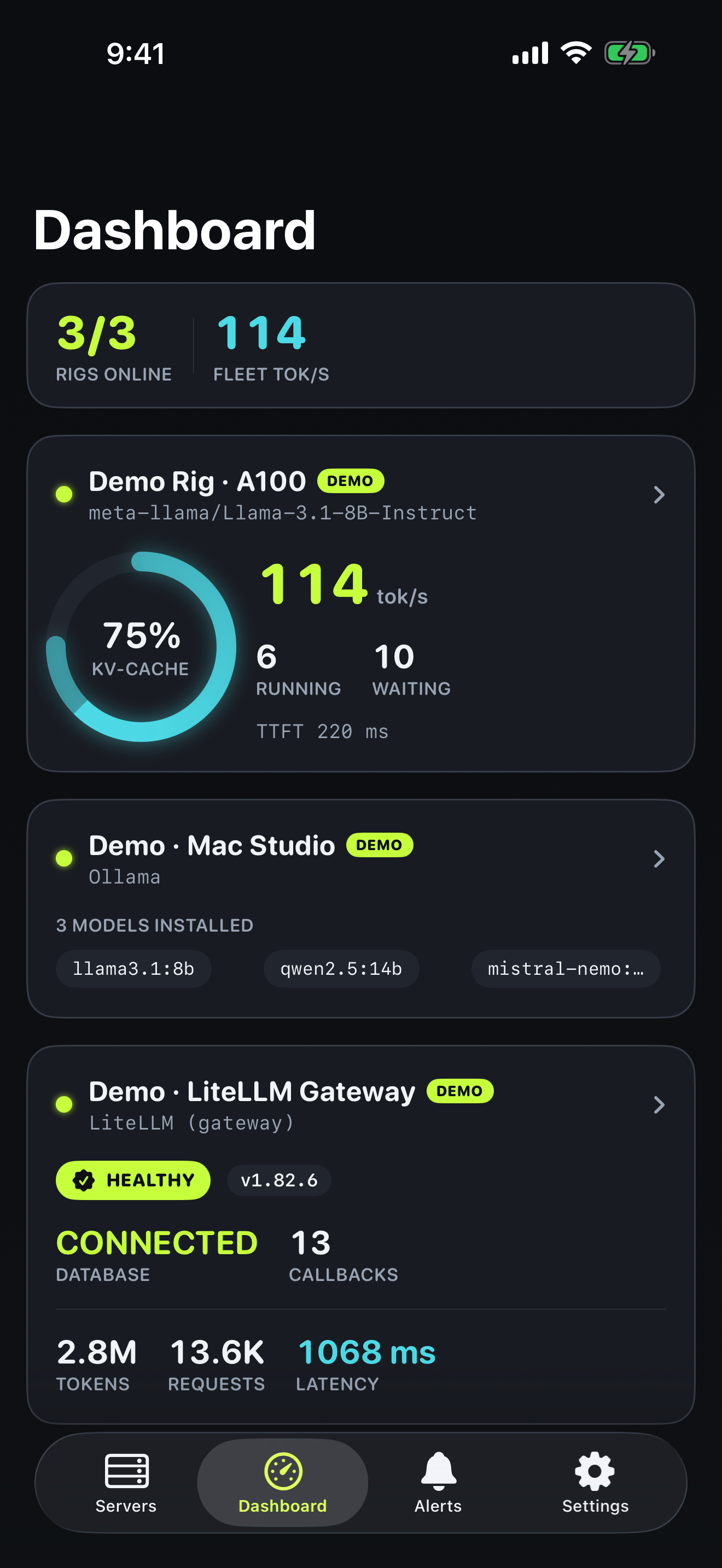
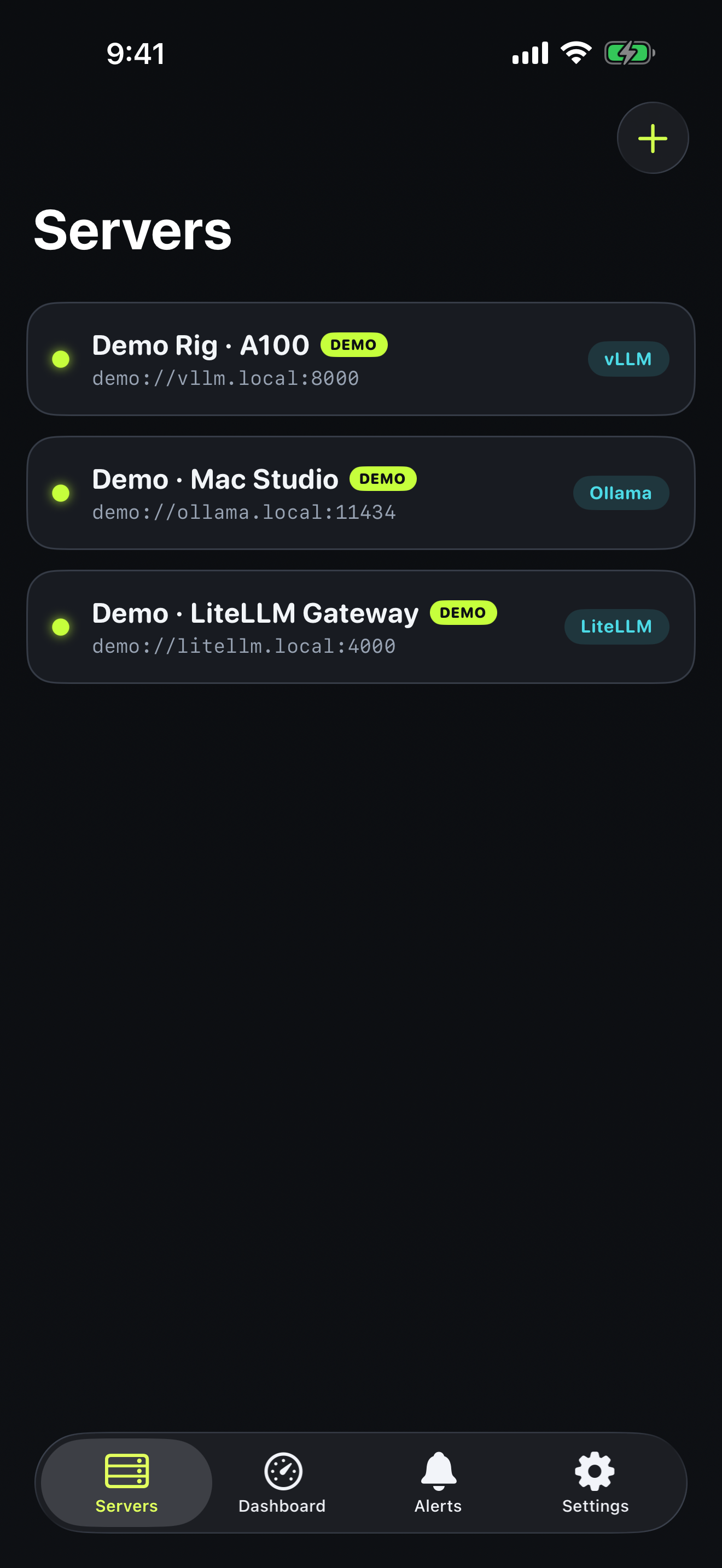
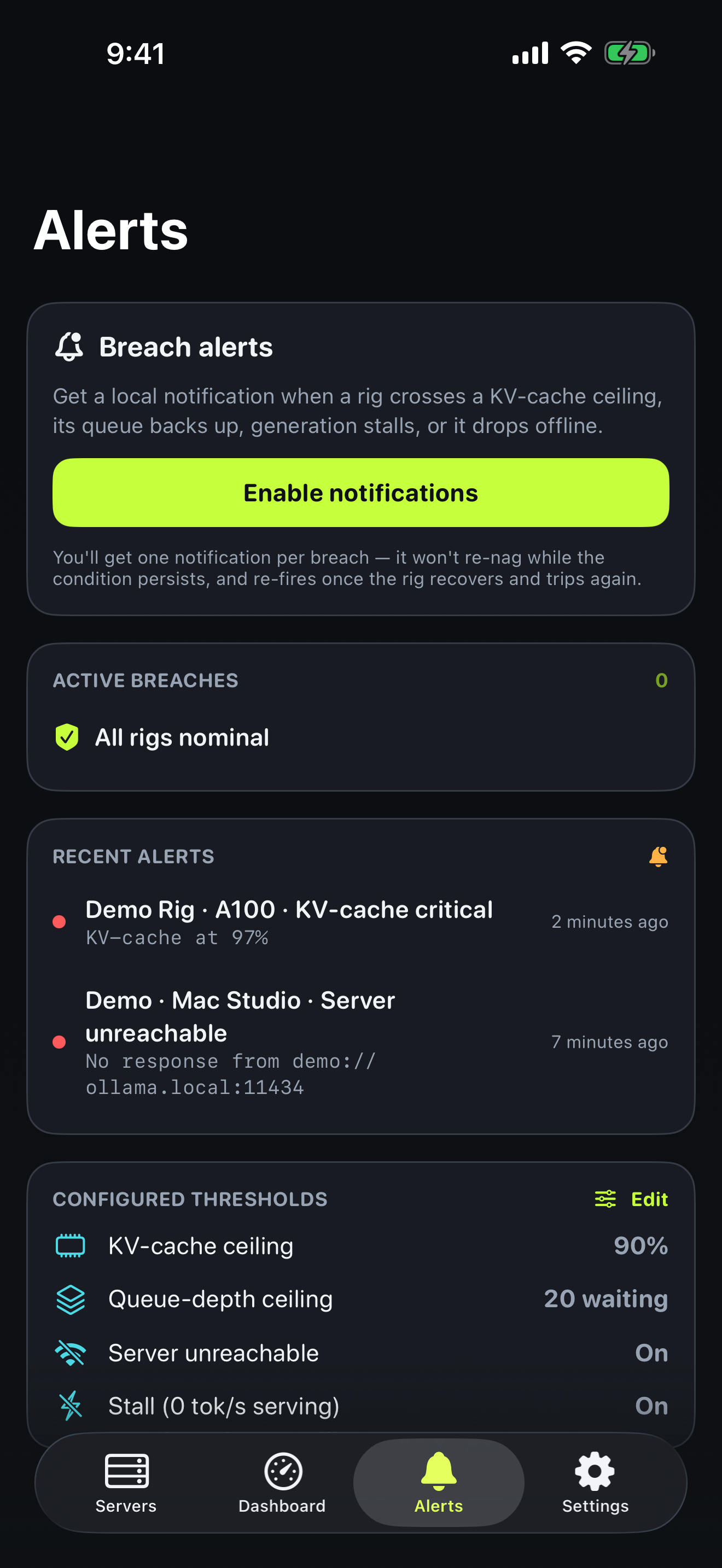
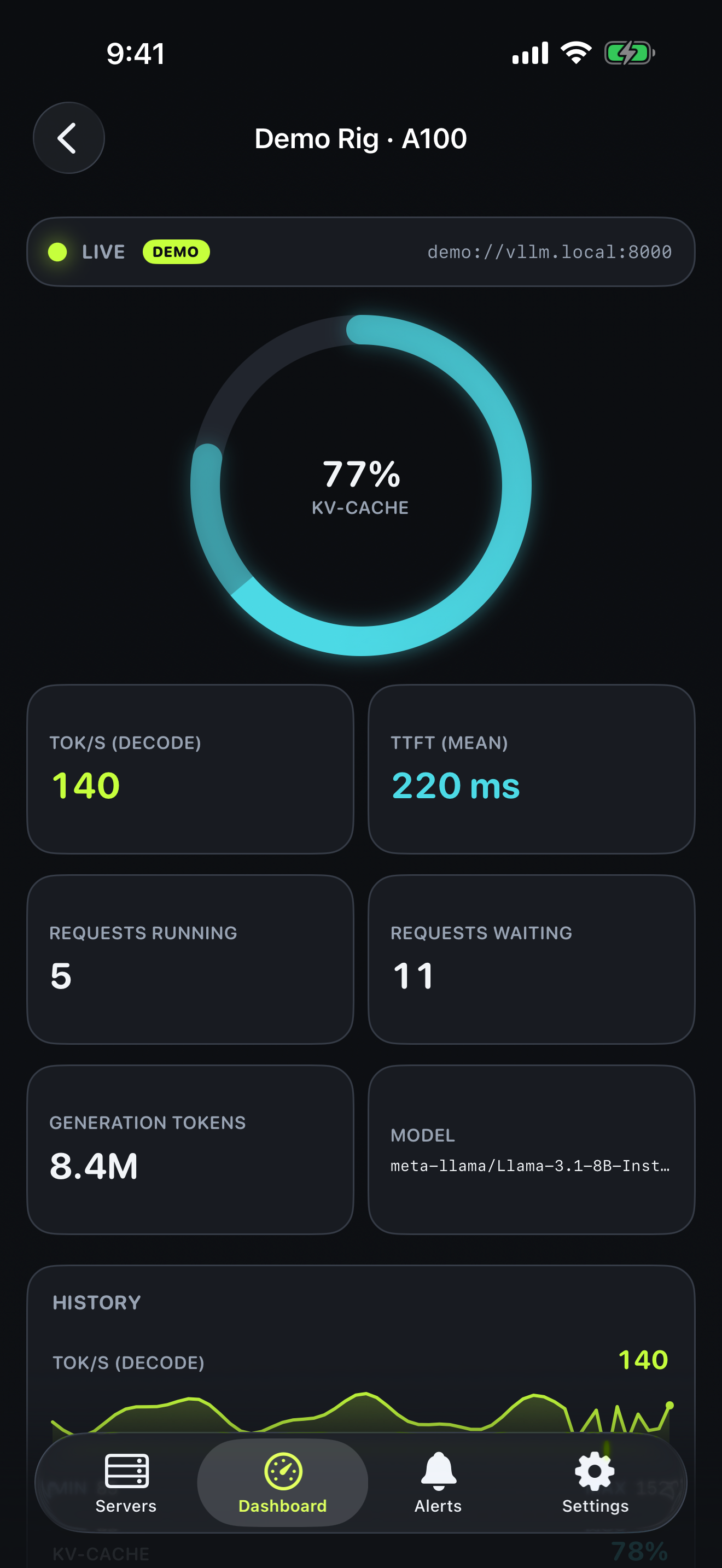
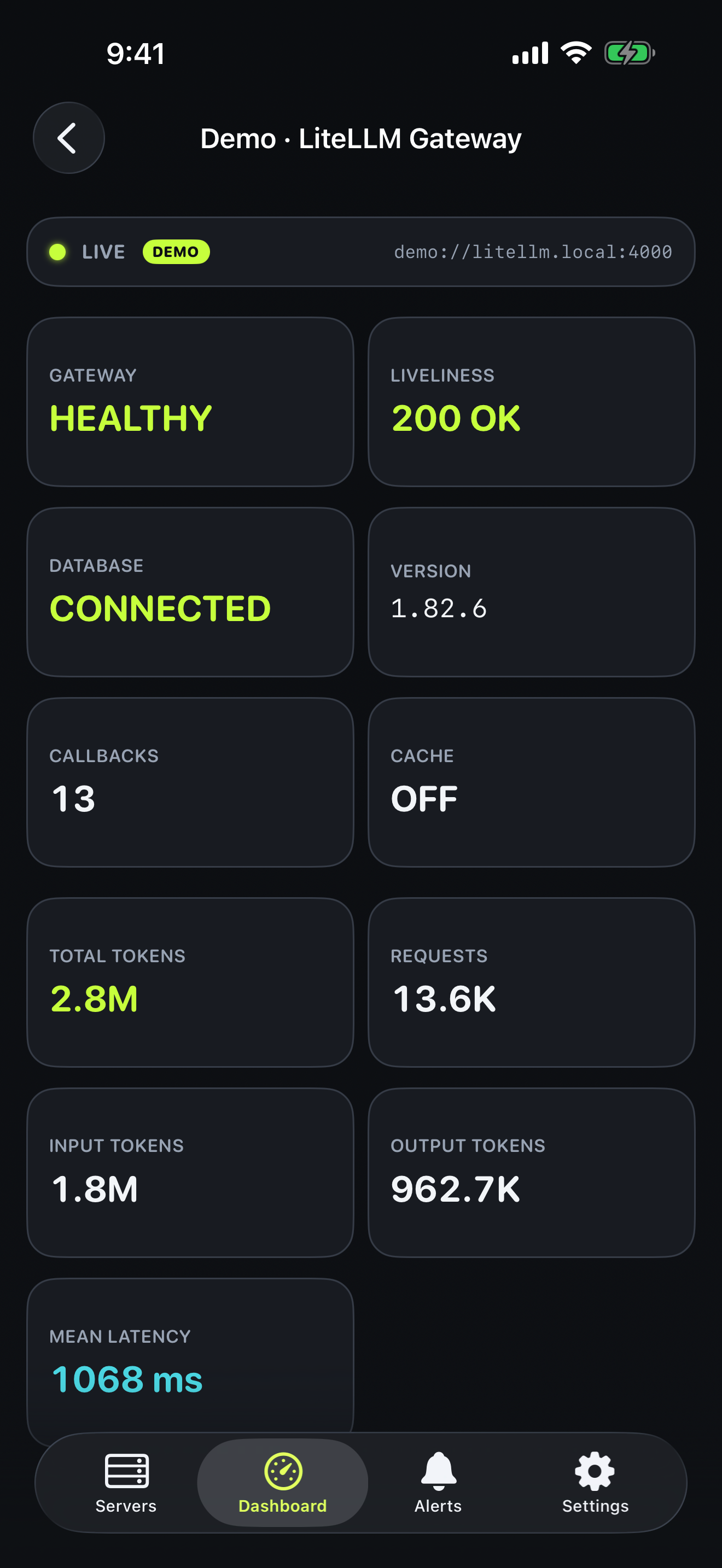
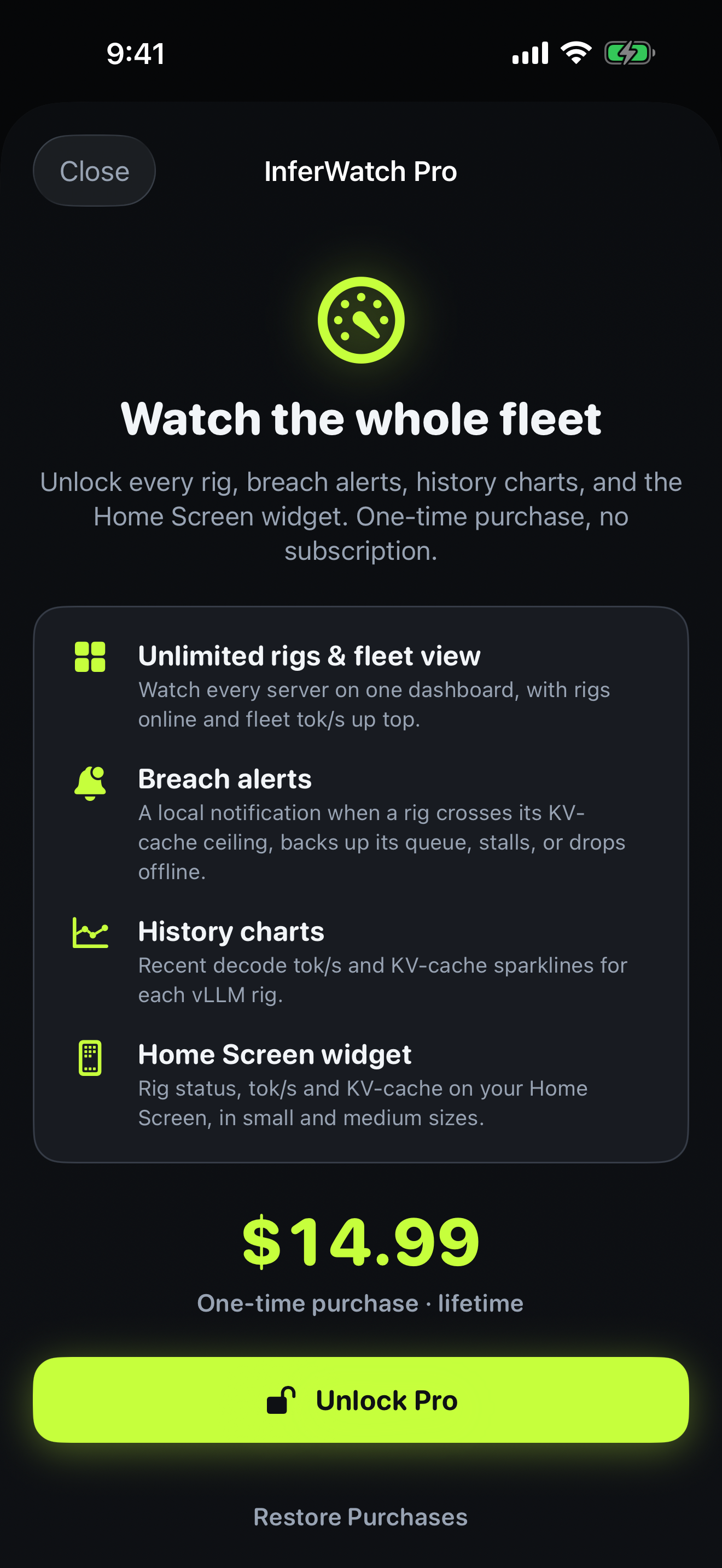
Screenshots are the App Store set for iPhone 6.9 inch displays. Preview them in the gallery.
The studio
About Forgehaven Labs
Forgehaven Labs LLC is a small software studio that builds privacy-first iPhone apps and tools. Its monitor apps, InferWatch, FireGlance and FinDeck, read your own servers directly: no account, no backend, no tracking.
For press questions, review access or interviews, write to [email protected] with "Press" in the subject.
InferWatch is an independent app and is not affiliated with or endorsed by the vLLM, Ollama, or LiteLLM projects. Their names are used only to describe compatibility.